We've given Refundee a new look, learn more.

Banks regularly deny claims for unfair reasons. A fraud gets called a civil matter, a generic pop-up gets called a warning, or a convincing scam gets judged with hindsight. None of those reasons is the final word. Decisions can be challenged and escalated to the Financial Ombudsman Service, and we know where they most often go wrong.

Why choose Refundee to recover your funds?
Over {{money-recovered-text}} recovered
The total amount we've got back from scams, for our clients.

FCA regulated
Authorised and regulated by the Financial Conduct Authority for claims management.


Rated 'Excellent' on Trustpilot
The UK’s best-rated fraud recovery specialist, from hundreds of verified reviews.
Helped over {{total-customers-text}} clients
From single bank transfers to group actions with hundreds of victims.

How to spot purchase fraud
Purchase scams are built to look like a bargain you would be foolish to miss. The listing looks genuine, the seller seems friendly, and the price is just low enough to make you act quickly. The signs in this article are the ones we see most often, and spotting even one of them is reason enough to pause and check before you pay.
It's free to find out if we can help
We've already helped over {{total-customers-text}} people recover {{money-recovered-text}}, and we're ready to help you too.
At Refundee, purchase scams are one of the more common scams we deal with. UK Finance reported that losses from purchase scams increased by 20% to £118.1 million in 2025, highlighting the growing threat posed by online fraudsters. If you are the victim of a purchase scam, and you used a UK bank account then you have options to recover.
As a regulated claims management company, if you’d like our help, just complete our online claim form or give us a call. Remember, you can do it yourself for free by taking your case to the Financial Ombudsman Service.
The price is too good to be true.
You may see the item listed at a lower price than usual, and it may include the claim that it is a “special offer” and that time is running out to purchase it at the lower price.
You have not seen the item in person.
The item will be listed online, which may show a genuine-looking item that has been copied from the original. The listing will usually look legitimate, and with the advancements in technology, it is becoming harder to spot a fake from the real one.
The ‘seller’ wants a quick sale and makes excuses for why.
The seller will claim that they just want rid of the item and want to sell it quickly. This is another tactic to push you into doing fewer checks and acting on impulse, rather than doing your due diligence.
The seller will not let you view the item before selling or makes excuses, such as the item being far away or abroad.
When you ask to view the item in person before purchasing, the seller will make various excuses as to why this cannot happen. This is a major red flag, as if the seller had nothing to hide and the item was legitimate, then they should have no problem with you viewing it in person.
They may offer delivery at a very low price or included in the price.
Another tactic used by scammers to trick you into a purchase scam is offering delivery fees included within the price or at a discount, which makes the purchase even more attractive to you when buying the item.
The request for payment in cryptocurrency or through PayPal ‘friends and family’.
Scammers will look to evade banking security by asking for payment in unusual ways. They will sometimes request that payment be made through crypto or through PayPal ‘friends and family’. Both these payment methods have fewer protections, so it may be more difficult to recover if you have paid this way.
They put pressure on you to purchase the item.
The scammers will use pressure tactics to push you into purchasing the item. This is a common tactic used by fraudsters in most scams. It moves you into a state of impulse and panic, rather than thinking straight and doing your due diligence. If you suspect someone is putting pressure on you, then you should take a step back, do your research, and speak to others before making any decisions.

Purchase Scam
Refundee recovers £145,000 from building purchase scam
A rogue trader charged our client £185,955 for incomplete, unnecessary and unsafe work, then the bank called it a civil matter. We spoke to other victims of the same scam, proved to the Financial Ombudsman that it was fraud and recovered £145,000.
Published Date
Purchase Scam
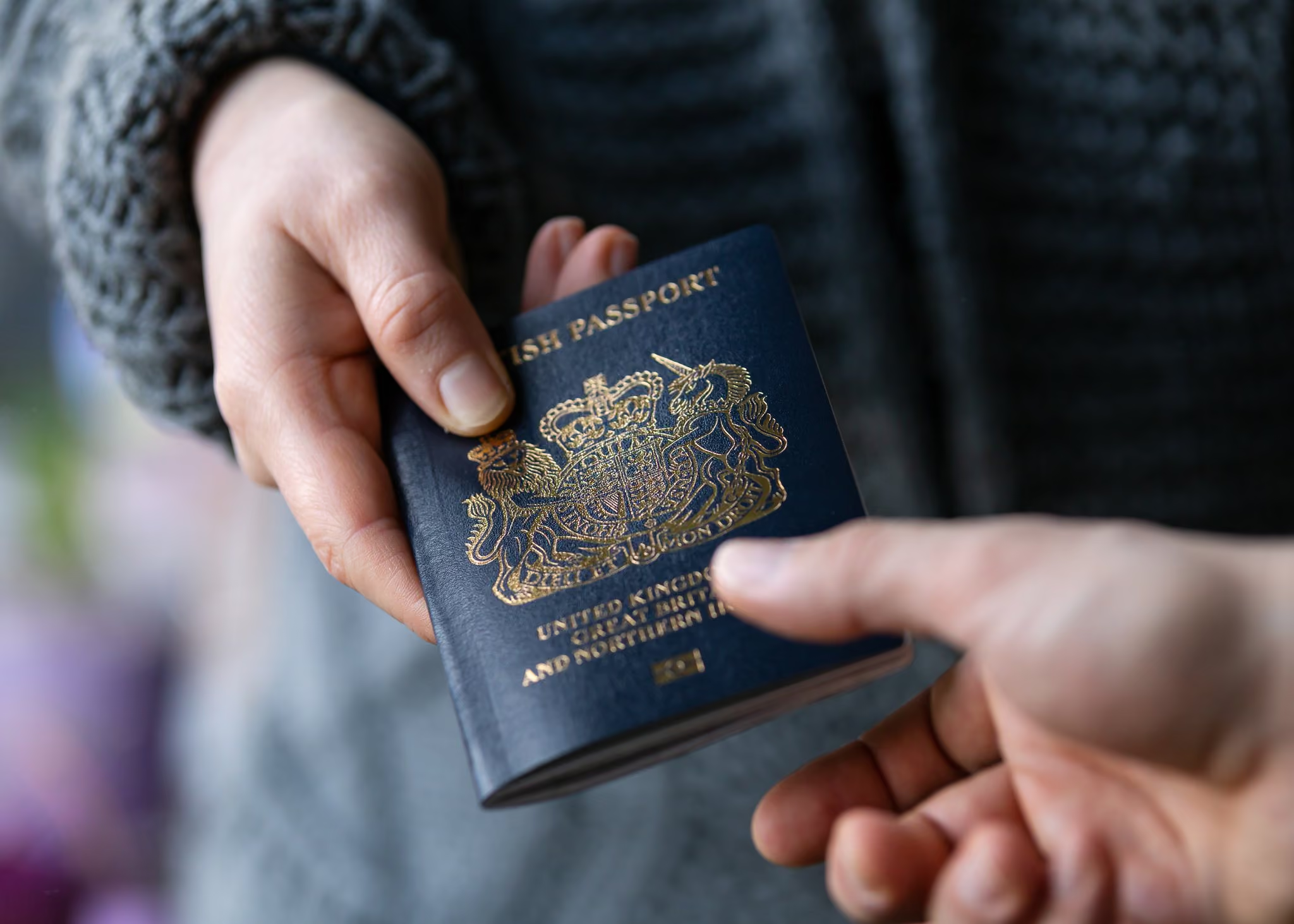
Refundee recovers £19,000 lost from visa purchase scam
A fake visa service took £19,000 for work visas, accommodation and paperwork, backed by forged government documents and confirmations for appointments that did not exist. After the bank's rejection, the Financial Ombudsman agreed the bank was at fault and the full amount was refunded.
Published Date
Purchase Scam
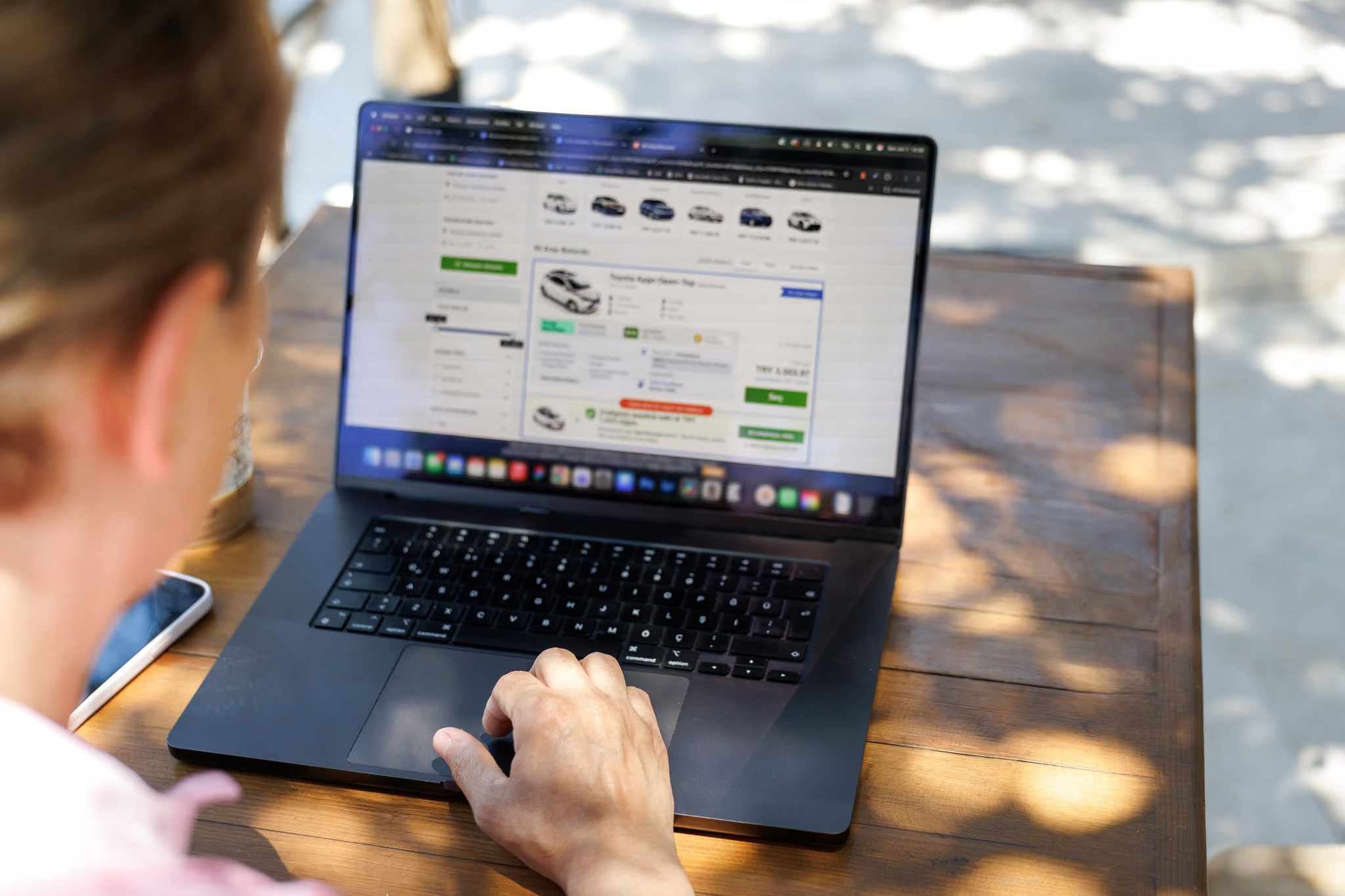
Refundee recovers £21,000 from fake vehicle purchase scam
A car advertised on social media never arrived. After the deposit, a fake delivery company issued invoice after invoice for shipping, storage and tax. The bank rejected the complaint, so we escalated to the Financial Ombudsman, which found the bank at fault and refunded the full £21,000.
Published Date
Rated Excellent on Trustpilot.
We’ve helped over {{total-customers-text}} people recover {{money-recovered-text}} in stolen funds.
I’ve lost money to a purchase scam, what shall I do?
Can I get my money back after a purchase scam?
Can Refundee help me recover my lost funds?
How does Refundee recover purchase scam losses?
How long does the fund recovery process usually take?
Purchase
Purchase Scams : How to Spot Them and Get Your Money Back
Purchase scams are on the rise and scammers often trick people into purchasing something that isn’t real. Learn how you can protect yourself and recover your money if you have been scammed through a purchase scam.
Purchase
Ticket Scams UK (2026): How to Spot a Fake Ticket and Get Your Money Back
Thousands of UK fans lose money to fake ticket sellers every year. Learn how ticket scams work, which events are most targeted, and exactly what to do if you've been caught out.
Purchase
Vehicle Purchase Scams - Warning Signs & Refund Help
Bought a car online and lost money? Learn the warning signs of vehicle scams and refund options.