We've given Refundee a new look, learn more.


Banks regularly deny claims for unfair reasons. A fraud gets called a civil matter, a generic pop-up gets called a warning, or a convincing scam gets judged with hindsight. None of those reasons is the final word. Decisions can be challenged and escalated to the Financial Ombudsman Service, and we know where they most often go wrong.

Why choose Refundee to recover your funds?
Over {{money-recovered-text}} recovered
The total amount we've got back from scams, for our clients.

FCA regulated
Authorised and regulated by the Financial Conduct Authority for claims management.


Rated 'Excellent' on Trustpilot
The UK’s best-rated fraud recovery specialist, from hundreds of verified reviews.
Helped over {{total-customers-text}} clients
From single bank transfers to group actions with hundreds of victims.

How to spot an invoice fraud
Invoice scams start with a payment you were already expecting to make to a builder, a solicitor or a conveyancer. The fraudsters slip into the email thread with an invoice that looks exactly right, and the only thing that has changed is the account number.
It's free to find out if we can help
We've already helped over {{total-customers-text}} people recover {{money-recovered-text}}, and we're ready to help you too.
Invoice scams can be one of the most damaging types of fraud. Fraudsters look for situations where you’re likely to send large sums from your account and try to insert themselves into the process. When successful, they manage to convince you that they are the conveyancer, builder, solicitor, or anyone else who was due a large sum of money, and they direct a paid invoice to their account.
Unfortunately, at Refundee, we have seen victims lose large amounts of money to invoice fraud, whether it be for house deposits, building work, retirement funds, the impact is damaging to an individual.
These losses are difficult to recover from, however, Refundee can help you recover your money.
If you are the victim of an invoice scam and have sent the funds from a UK bank account, you have options to recover your money.
As a regulated claims management company, if you would like our assistance, simply complete our online claim form or give us a call. Remember, you can also handle it yourself for free by taking your case to the Financial Ombudsman Service.
How do Invoice scams work?
- You may be communicating with a company or person about paying an invoice for work or a service they have completed for you.
- The fraudsters will insert themselves into the process, usually by finding details online or, more commonly, hacking into your email address or that of the company or person you are dealing with.
- From this, they will know that you are planning to send money in the next few days or weeks and will email you pretending to be the company or individual you are dealing with.
- They will either use a very similar email (one letter difference) or claim they have a new email address and that you can communicate with them through the new email.
- After this, they will send an invoice for the payment. Believing you are dealing with the legitimate person or company, you will send the money and pay the invoice, unknowingly paying a fraudster instead of the legitimate recipient.
- Subsequently, the legitimate person or company will contact you asking why you haven’t made payment yet. This is when the realisation that you have been the victim of an invoice scam occurs.

Invoice Scam
£68,000 recovered for invoice scam victim
Scammers hacked the email thread between our client and their financial advisor, then sent payment details from an address one letter different. £120,000 went to the fraudsters. We escalated to the Financial Ombudsman and recovered £68,000.
Published Date

Invoice Scam
£140,000 recovered for business invoice scam victim
While waiting for a genuine supplier invoice, our client received one from 'debt collectors' claiming to act for the supplier, and paid £290,000. We built the case under UK banking regulations, escalated to the Financial Ombudsman and recovered £140,000.
Published Date
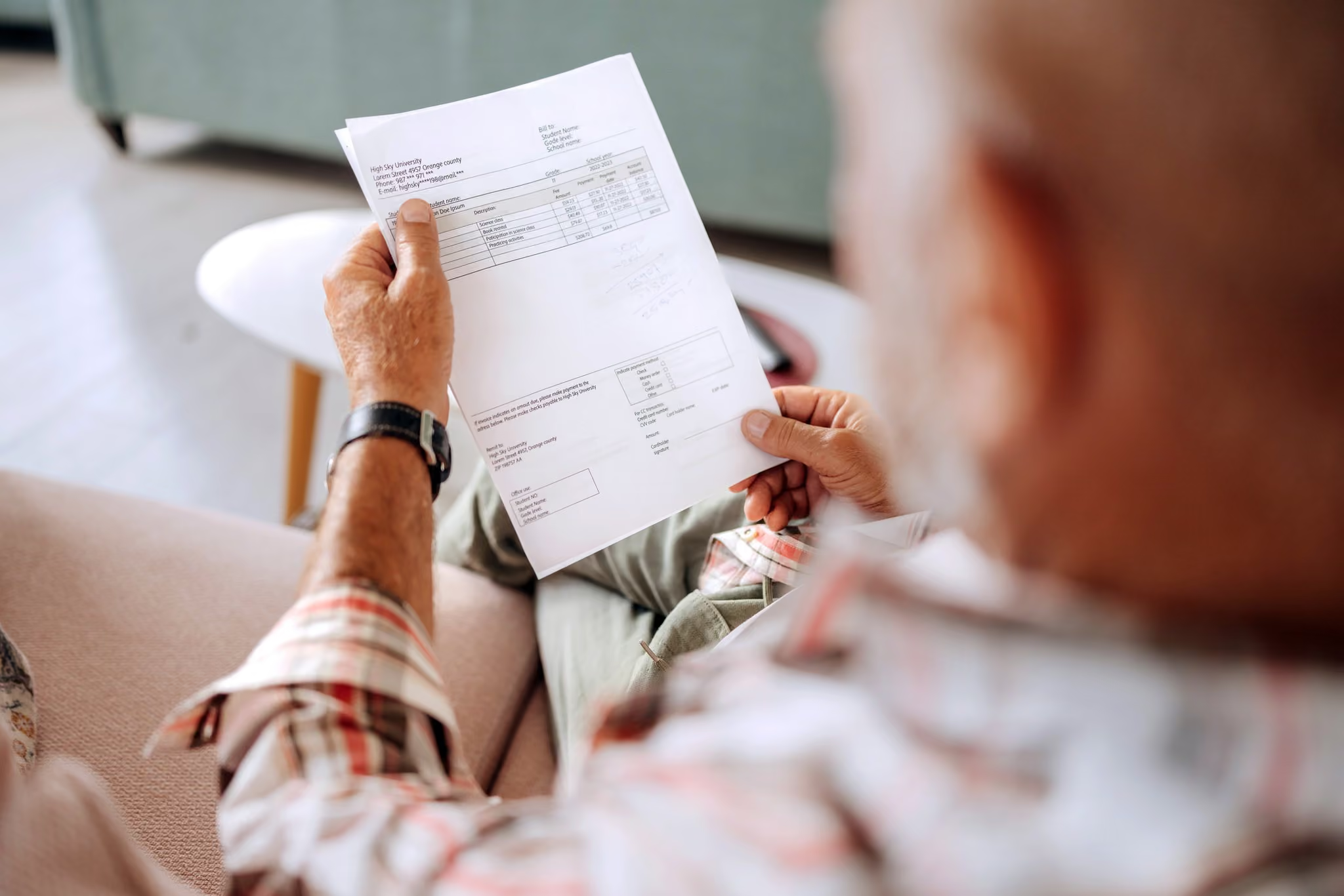
Invoice Scam
Refundee recovers retirement fund lost through invoice scam
An email that appeared to come from a company our client had invested with before offered a new opportunity. The address was not the same and £200,000 went to an unknown party. After the bank's rejection, the Financial Ombudsman agreed the bank was at fault and ordered a full refund.
Published Date
Rated Excellent on Trustpilot.
We’ve helped over {{total-customers-text}} people recover {{money-recovered-text}} in stolen funds.
How does invoice fraud work?
What is an example of invoice fraud?
Can I get my money back after an invoice scam?
Can Refundee help me recover my lost funds?
How long does the fund recovery process usually take?
No items found.