We've given Refundee a new look, learn more.


Banks regularly deny claims for unfair reasons. A fraud gets called a civil matter, a generic pop-up gets called a warning, or a convincing scam gets judged with hindsight. None of those reasons is the final word. Decisions can be challenged and escalated to the Financial Ombudsman Service, and we know where they most often go wrong.

Why choose Refundee to recover your funds?
Over {{money-recovered-text}} recovered
The total amount we've got back from scams, for our clients.

FCA regulated
Authorised and regulated by the Financial Conduct Authority for claims management.


Rated 'Excellent' on Trustpilot
The UK’s best-rated fraud recovery specialist, from hundreds of verified reviews.
Helped over {{total-customers-text}} clients
From single bank transfers to group actions with hundreds of victims.

How to spot a safe account scam
Safe account scams start with a call from a number that matches your bank and a warning that your money is at risk right now. You are urged to move it somewhere safe, quickly and quietly, and the account waiting for it belongs to the fraudsters.
It's free to find out if we can help
We've already helped over {{total-customers-text}} people recover {{money-recovered-text}}, and we're ready to help you too.
At Refundee, safe account scams are one of the more common scams we deal with. Safe account scams have consistently made up a large percentage of the money lost by the UK public to Authorised Push Payments (APP) scams, and according to UK Finance, £55.1 million was lost in 2025 alone.
If you are the victim of a safe account scam and used a UK bank account, then you have options to recover your money.
As a regulated claims management company, if you’d like our help, just complete our online claim form or give us a call. Remember, you can do it yourself for free by taking your case to the Financial Ombudsman Service.
How do safe account scams work?
- Safe account scams often begin before the phone even rings. Fraudsters can purchase your details online through data leaks. Or, you may have previously responded to a fake SMS impersonating a delivery company like Evri or the Royal Mail, HMRC, or the NHS and entered some personal details without thinking much of it. The fraudsters now have enough information to sound convincingly like your bank or the police when they call.
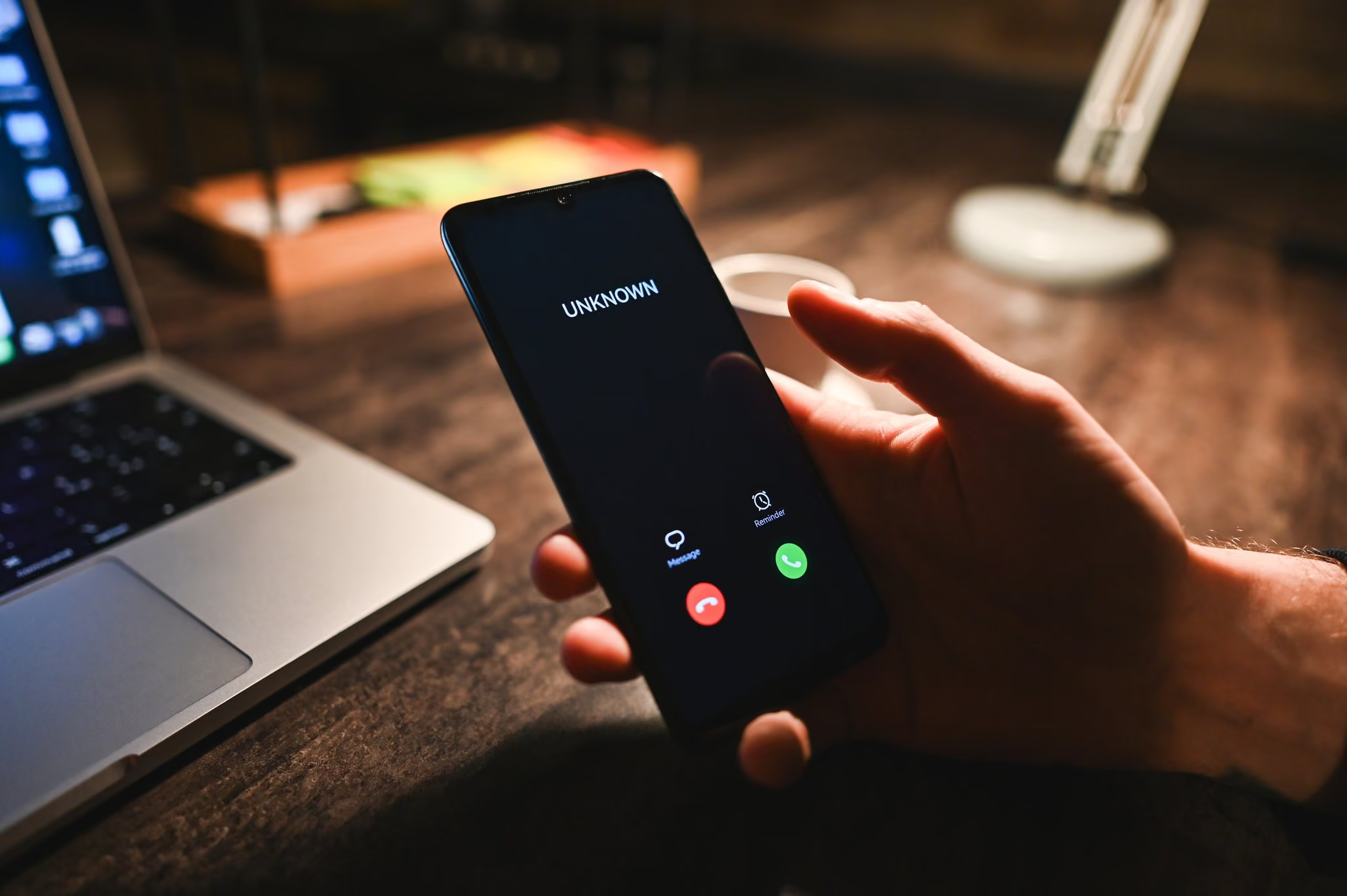
- When they do call, they will most likely have spoofed your bank’s number. This means the call appears on your phone as a legitimate, recognisable number, or an SMS drops into the same thread as genuine messages from your bank. This is what makes safe account scams so difficult to detect, because every visual signal is telling you the contact is real.
- Fraudsters are very smart in how they operate, and they will sound very sophisticated in the way they speak. They will conduct security checks, just like the bank would, and they will claim they are from your bank’s fraud department.
- Once they have you on the line, they create a sense of urgency to make you panic. They will read out a list of large transactions they claim have been attempted on your account. They tell you that you have not made these payments, but someone is trying to take your money right now and you need to act quickly.
- The scammers will sometimes use other banks as a way to deceive you, and you may receive calls or SMS messages from different numbers claiming they are working with your bank to prevent the fraud.
- The scammers then present the scam: they tell you to move your money to a safe account they will provide information about immediately, to protect it. Believing you are following your bank’s instructions, you make the transfer. That account belongs to the fraudsters, and unfortunately, the money is gone. You have become a victim of what is known as a “safe account” scam.
- Sometimes, the scammers will conduct a different type of ‘safe account’ scam and may also explain that, in order to protect your account, you are required to read out security codes to them. These will come through as text messages to your phone, again through spoofing the bank’s number.
- These codes are, in fact, one-time passcodes that are used to authorise payments. This is the scammers making payments from your account without your knowledge, tricking you into reading out the codes for the payments to go through. These payments are unauthorised and should always be refunded by the bank under unauthorised fraud reimbursement rules.

Safe Account Scam
Refundee recovers £43,000 for safe account scam victim
Scammers posing as Lloyds called our client at work, claiming their account had been compromised. Attempted transactions in the banking app backed up the story, so our client moved their money to a so-called safe account. We escalated to the Financial Ombudsman and recovered the full £43,000.
Published Date

Safe Account Scam
Refundee recovers £95,600 for safe account scam victim
Posing as the police from a spoofed number, scammers convinced our client their identity was tied to a crime and their money had to be moved to prove innocence. The bank and the FOS investigator both rejected the case. Our appeal to the Ombudsman secured a full £95,600 refund.
Published Date
Safe Account Scam
£50,000 recovered for a “safe account” victim who thought they were speaking to their bank
Scammers spoofed the bank's number and sent an SMS to convince our client their account was under attack and their money had to move to a 'safe account'. The bank rejected the complaint. The Financial Ombudsman found the bank at fault and the full £50,000 was refunded.
Published Date
Rated Excellent on Trustpilot.
We’ve helped over {{total-customers-text}} people recover {{money-recovered-text}} in stolen funds.
What is an example of impersonation fraud?
What’s a ‘safe account’?
Safe Account
What Is Social Engineering? Types, Examples and How to Stay Safe
Discover what social engineering is, the main types, why attackers use it to manipulate victims, and how to recover your funds if you have been affected.
Safe Account
Safe Account Scams: How They Work and How to Get Your Money Back
Fraudsters are spoofing bank numbers and tricking victims into transferring their own money. Learn how safe account scams work, how to spot them, and what to do if you have been targeted.
Safe Account
How Scammers use Social Engineering Tactics to Exploit Victims
Learn how social engineering scams work, how fraudsters gain trust within communities, and the warning signs to avoid investment fraud. Discover how to protect yourself and what to do if you’ve been targeted.