We've given Refundee a new look, learn more.


Banks regularly deny claims for unfair reasons. A fraud gets called a civil matter, a generic pop-up gets called a warning, or a convincing scam gets judged with hindsight. None of those reasons is the final word. Decisions can be challenged and escalated to the Financial Ombudsman Service, and we know where they most often go wrong.

Why choose Refundee to recover your funds?
Over {{money-recovered-text}} recovered
The total amount we've got back from scams, for our clients.

FCA regulated
Authorised and regulated by the Financial Conduct Authority for claims management.


Rated 'Excellent' on Trustpilot
The UK’s best-rated fraud recovery specialist, from hundreds of verified reviews.
Helped over {{total-customers-text}} clients
From single bank transfers to group actions with hundreds of victims.

How to spot an unauthorised scam
Unauthorised fraud is when money leaves your account without your consent. A stolen card, a stolen phone or a fraudster who has talked their way into your online banking can all lead to payments you never agreed to make. If this has happened to you, you have strong protections for a refund, although banks don't always apply them fairly.
It's free to find out if we can help
We've already helped over {{total-customers-text}} people recover {{money-recovered-text}}, and we're ready to help you too.
Refundee can help when you’ve been charged for a payment you did not consent to or intend to make. This is referred to as ‘unauthorised fraud’. This is usually when your card is used without your permission or somebody steals your phone and uses it to send money. It can also often be when someone has tricked you into making a payment that you didn’t want to make.
If you consented to a transaction that turns out to be fraud, this is different and is treated as an Authorised Push Payment (APP) scam.
If you are the victim of an unauthorised scam, then you have strong protections for a refund; however, banks don’t always adhere to this and reject refunds for unfair reasons.
As a regulated claims management company, if you’d like our help, just complete our online claim form or give us a call. Remember, you can do it yourself for free by taking your case to the Financial Ombudsman Service.
Examples of unauthorised fraud
Shoulder Surfing
A physical way of being the victim of unauthorised fraud is shoulder surfing. This is where a fraudster looks over your shoulder when you are taking money out of a cashpoint as you enter your pin number. Usually, they will film this or note the number down. Fraudsters will also look to watch you enter your pin number on your phone, which will allow them access to your online banking and your card if they steal your phone or cards.
Remote Access
Fraudsters can remotely access your account or computer in a number of ways and make payments from your account to an account controlled by them. A more common example of this is “safe account” scams, where the fraudster will trick you into giving them access to your account by pretending to be your bank and asking you to share a verification code, which allows them access to your online banking. Fraudsters can also pretend to be tech support or the police and may need access to your account for various reasons.
Apple Pay Scam
Fraudsters will claim to be from your bank and tell you to cancel your card as there has been fraudulent activity on it. They state that a new card is on the way, and in the meantime, you should set up Apple Pay on your account temporarily. In doing so, they will actually set this up on their phone, and they then have access to your account through Apple Pay and go on a spending spree.
Unauthorised Scam
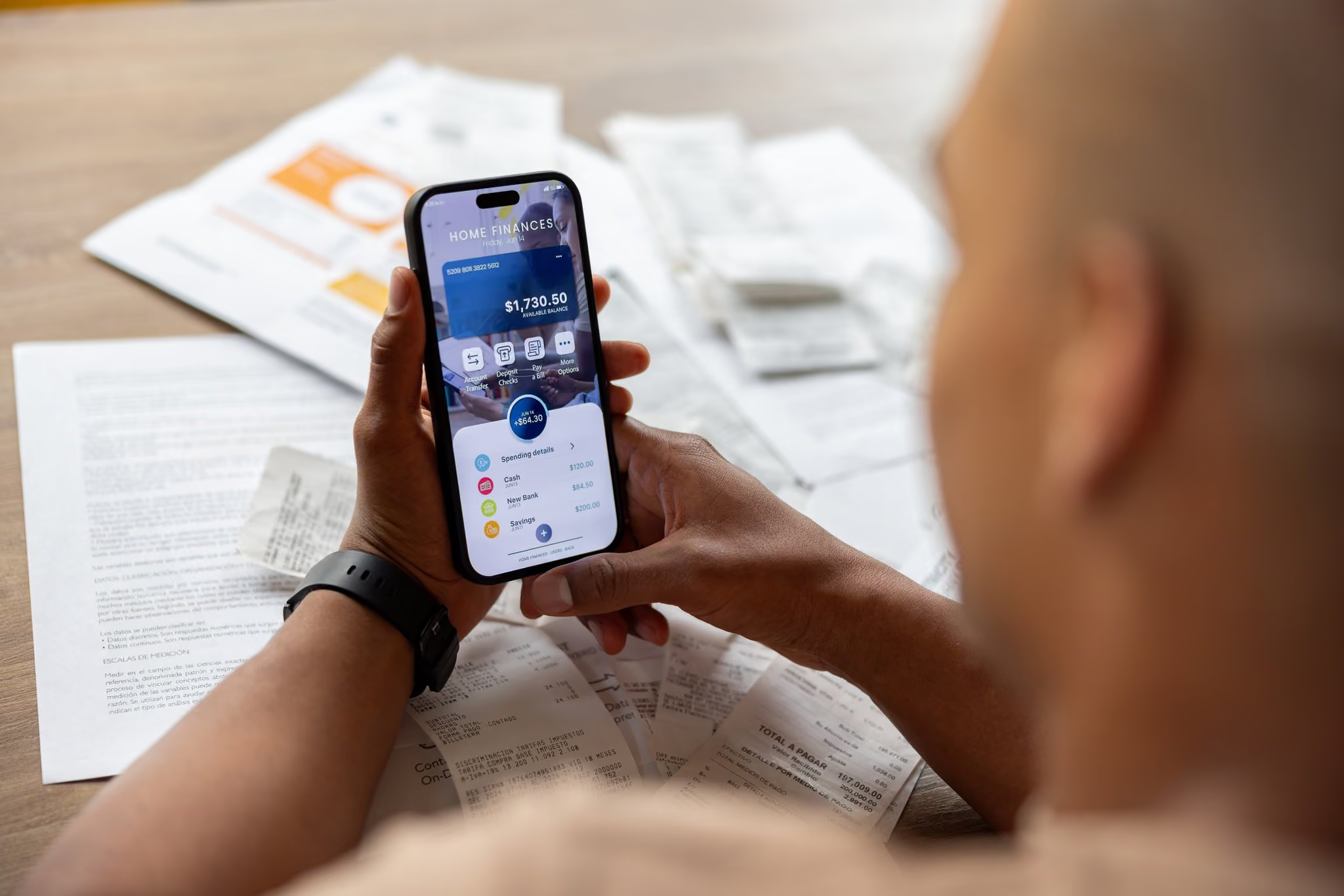
Recovery for victim of unauthorised scam - £14,000 returned back to the rightful owner
Card details added to a Google Pay account led to a run of transactions that continued even after our client asked the bank to freeze the card. The bank denied any fault. The Financial Ombudsman disagreed and our client was refunded the full £14,000.
Published Date

Unauthorised Scam
Refundee recovered life savings lost in unauthorised scam
Posing as Revolut, scammers had our client install AnyDesk and share a one-time passcode from a spoofed text, then drained the account. The bank rejected the complaint. We escalated to the Financial Ombudsman, which found the bank at fault and refunded £154,000 of £170,000.
Published Date
Unauthorised Scam
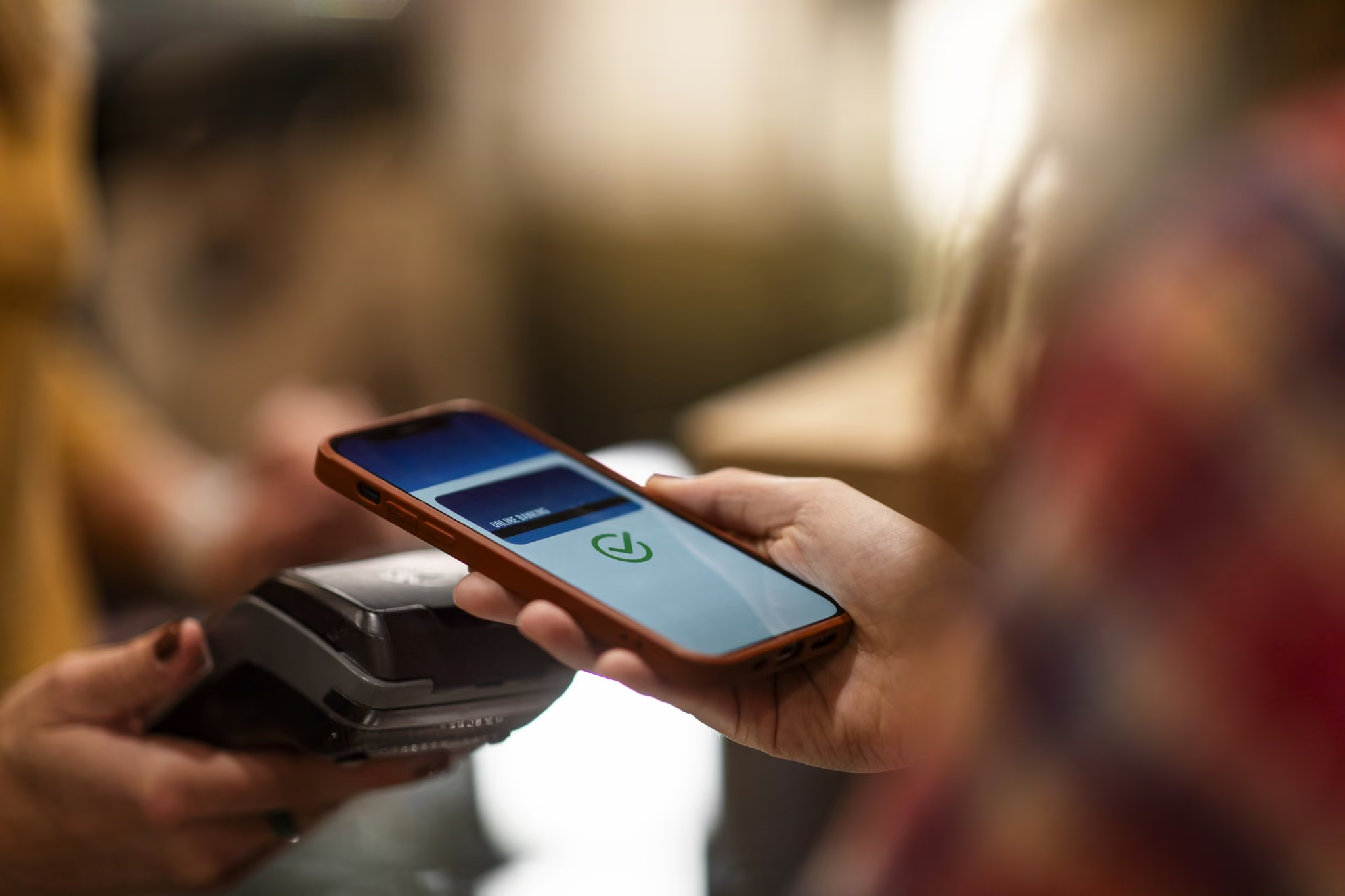
Refundee recovers £33,000 from unauthorised safe account scam
Scammers posing as Revolut talked our client through a passcode reset, then made four unauthorised Apple Pay payments. With one month left before the FOS deadline, we gathered the evidence and submitted the case. The Financial Ombudsman instructed a full £33,000 refund.
Published Date
Rated Excellent on Trustpilot.
We’ve helped over {{total-customers-text}} people recover {{money-recovered-text}} in stolen funds.
What is unauthorised fraud?
What is an example of unauthorised fraud?
Can I get my money back after an unauthorised scam?
My bank has rejected my claim. What can I do?
Can Refundee help me recover my lost funds?
How does Refundee recover unauthorised scam losses?
How long does the fund recovery process usually take?
Unauthorised
SIM Swap Fraud: How to Spot It, Stop It and Get Your Money Back
Learn how SIM swap fraud works, the warning signs to watch for, and what to do if you have lost money.